Subscribe


 Subscribe
The Best Stargazing Spots in Australia for a Magical Night
Wrap yourself in your warmest layers and head out to these regional gems for a night of awe-inspiring stargazing in Australia.


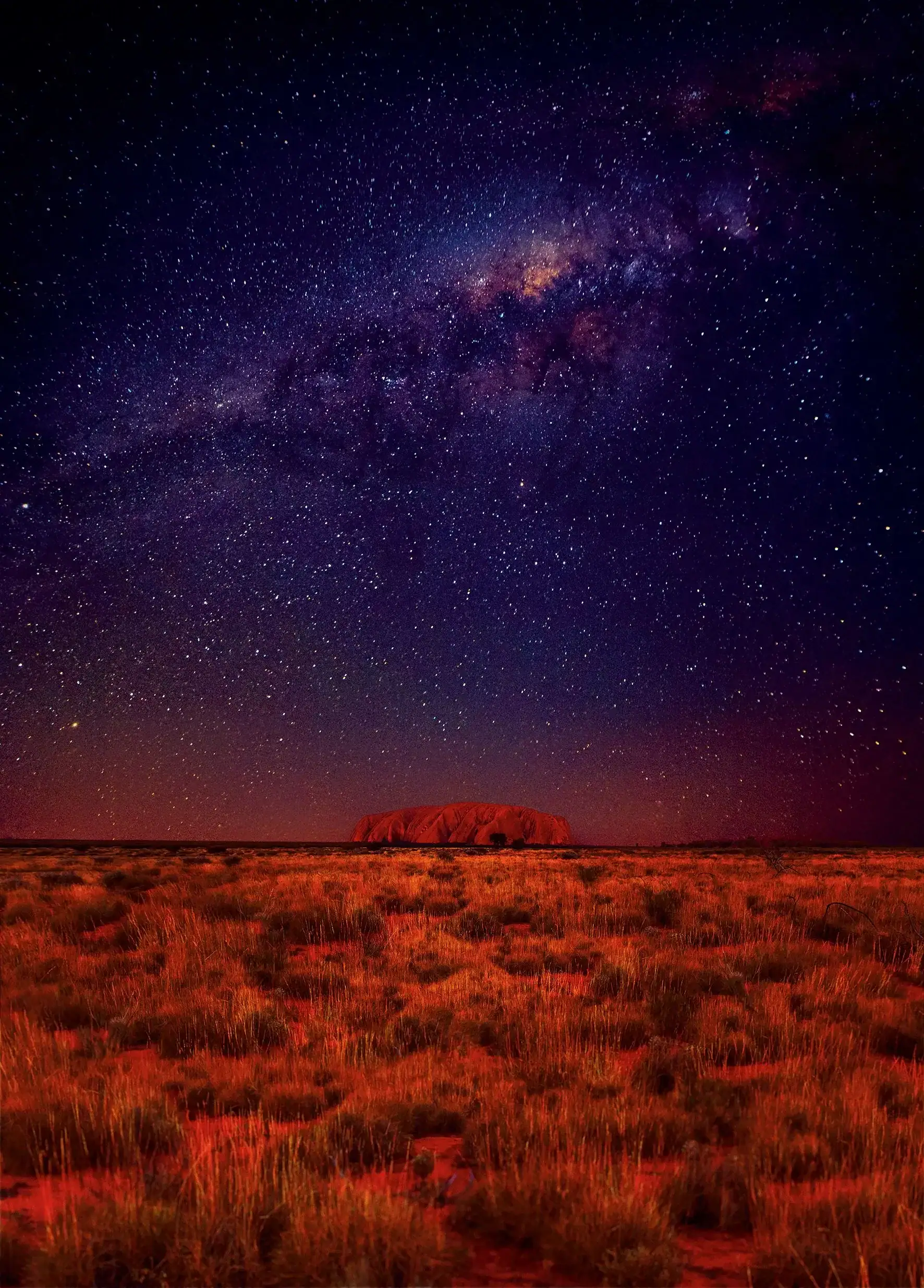
The best stargazing spots in Australia are scattered across coastlines, deserts and alpine valleys where the sky still gets to be the main event. There’s something about trading the city’s glow for proper darkness that turns an ordinary night into something closer to a ritual, camping under the Milky Way, booking into an observatory, or just pulling over somewhere remote because the stars demanded it.
Planning a low-budget date night, a road trip, or simply seeking a moment of quiet reflection under the cosmos? We’ve curated Australia’s top stargazing destinations so you can experience the night sky in all its breathtaking splendour.
In This Guide
- Best Stargazing Spots in Australia: New South Wales
- Best Stargazing Spots in Australia: Victoria
- Best Stargazing Spots in Australia: Queensland
- Best Stargazing Spots in Australia: South Australia
- Best Stargazing Spots in Australia: Western Australia
- Best Stargazing Spots in Australia: Tasmania
- Best Stargazing Spots in Australia: Northern Territory
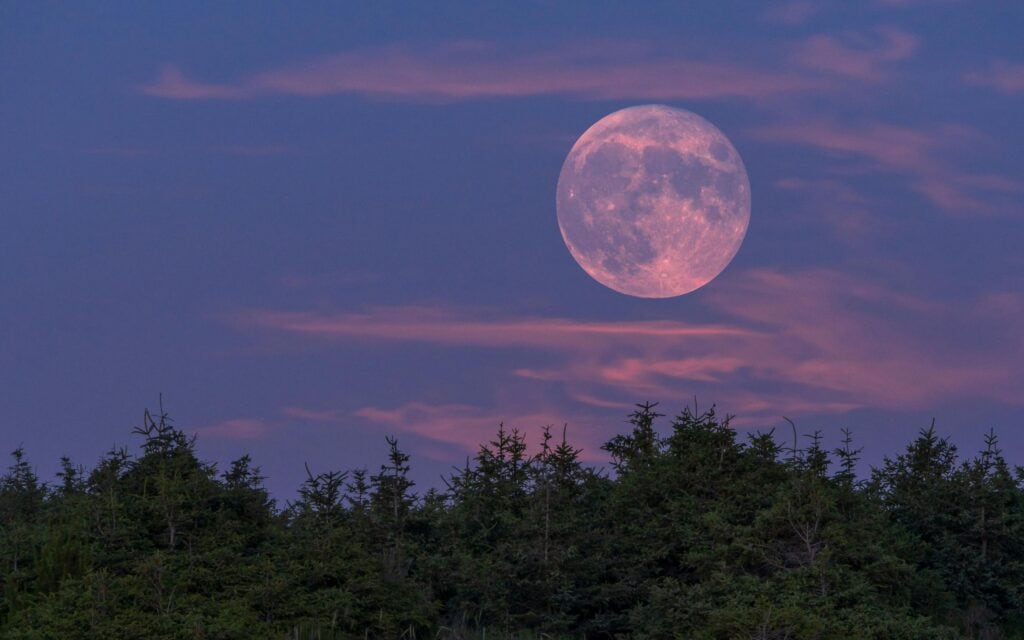
Australia’s Night Sky Is About to Serve Up a Strawberry Moon
If you’ve been waiting for a reason to brave the cold, the Strawberry Moon is it. The name belongs to June’s full moon, and despite what it sounds like, the moon won’t actually turn pink on you. It comes from Native American tradition, where the June full moon signalled the start of wild strawberry harvest season, and NASA traces its European names back to mead and honey, which feels like a perfectly reasonable excuse to pour something warm before you head outside.
This year’s full moon peaks on the 30th and is best seen once the sun goes down, so rug up, find somewhere dark, and give yourself a moment under the winter sky. In the Southern Hemisphere, it sits higher than any other full moon of the year, and as 2026’s second micromoon, it’s tracking at its furthest point from Earth, appearing a touch smaller and dimmer than usual. Find somewhere properly away from the city glow, and none of that will matter.
Best Stargazing Spots in Australia: New South Wales
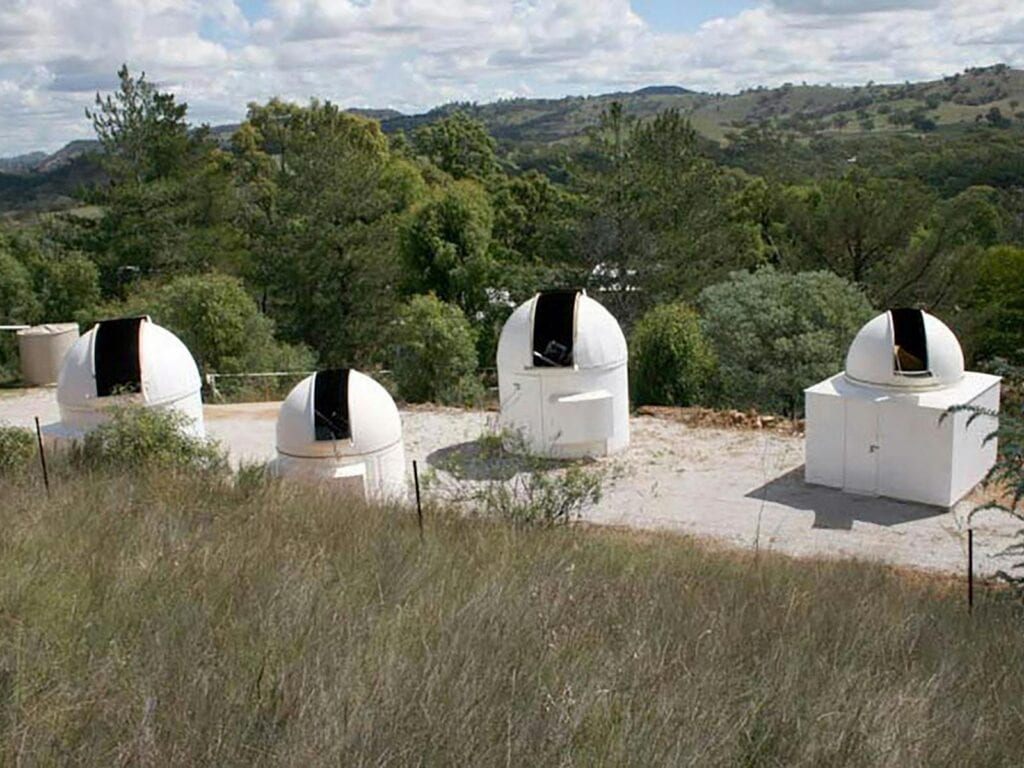
Mudgee Observatory
Mudgee may be famous for wine, but its observatory proves the real vintage is overhead. One minute you’re swirling a shiraz, the next you’re squinting at Saturn like an over-eager space nerd. The skies here are ridiculously clear, the telescopes powerful, and the vibe delightfully unpretentious — just country calm, cosmic drama and you pretending you totally know which constellation is which. A brilliant night out in every sense.
961 Old Grattai Road, Grattai
Bathurst Observatory
Far from the urban spill of city lights, Bathurst Observatory provides a quieter, more contemplative gaze into the galaxy. This storied outpost of astronomy blends old-world charm with cosmic curiosity — all domed ceiling, polished telescopes, and the hush before Saturn’s rings come into focus. Guided tours and intimate planetarium sessions illuminate the night with both science and poetry, making the stars feel closer, the silence deeper, and the universe somehow more personal. A stellar escape in every sense.
6 Priors Lane, Billywillinga
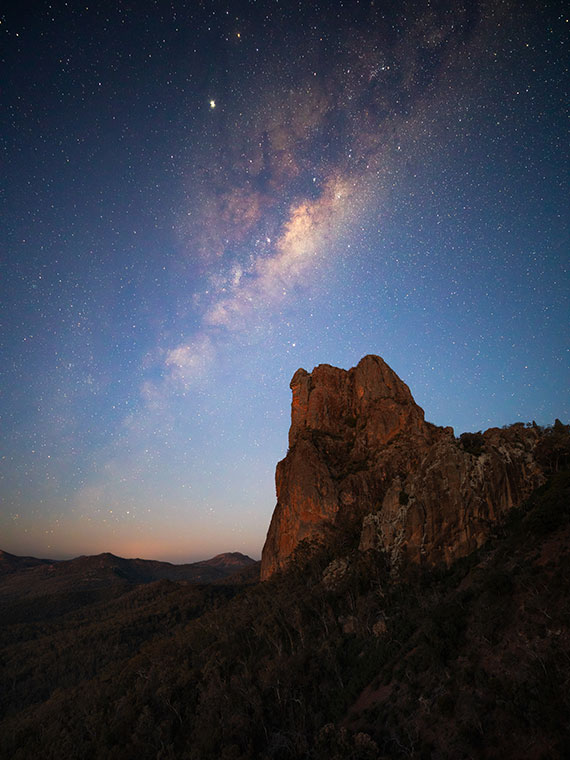
Warrumbungle National Park
For an unforgettable stargazing experience, Warrumbungle National Park delivers in every way. Australia’s first Dark Sky Park, this majestic NSW landscape offers some of the clearest, most uninterrupted night skies in the country. No city lights, no distractions — just you, the cosmos, and the kind of starry canopy that feels infinite. With its high altitude, minimal light pollution, and the nearby Siding Spring Observatory, this is where astronomy and awe collide. Absolutely worth the pilgrimage.
Belougerie Flats Trail, Warrumbungle

Blue Mountains
Less than an hour from Sydney, the Blue Mountains cast off the city’s glow and unveil a sky brimming with stars. Here, the air sharpens, silhouettes soften, and constellations burn bright across a velvety expanse. From Wentworth Falls to the clifftop lookouts above, it’s an invitation to slow down and look up. Go solo and savour the silence, or join a Blue Mountain Stargazing tour where expert guides bring the night sky to life with telescopes, mythology, and science.
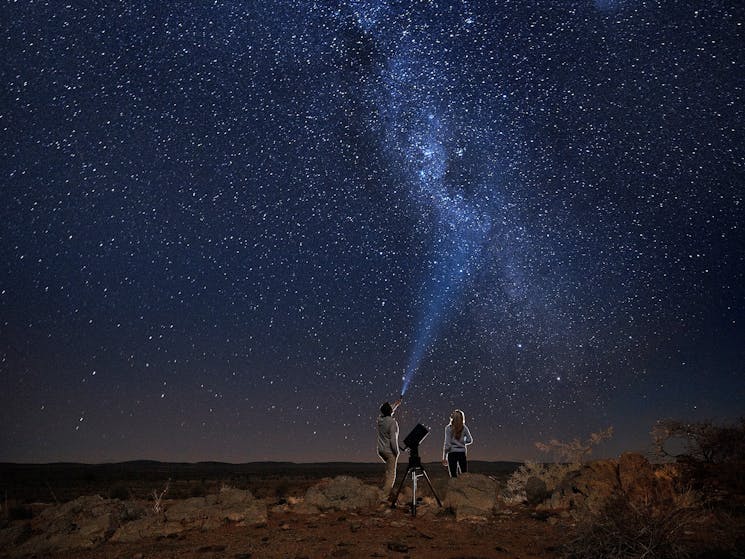
Broken Hill
Broken Hill, famed as the rugged backdrop of Mad Max, holds another kind of magic after dusk. Beneath its vast outback skies, where light pollution fades into legend, the Milky Way stretches like a shimmering river across endless horizons. The dry, crystalline air sharpens every star, turning the night into a quiet cathedral of light and space. Here, where the landscape breathes wide and wild, stargazing becomes a moment of profound stillness — a celestial invitation to lose yourself in the universe’s oldest stories.

Worimi National Park
Worimi National Park may be better known for its soaring dunes and sweeping ocean views, but after dark, it’s a celestial sanctuary waiting to be discovered. Away from the glare of nearby towns, the night sky stretches endlessly above ancient sand and sea. Lay back among the shifting dunes, warm drink in hand, and let the stars unfurl in silence. No crowds, no noise — just you, the sea breeze, and a glittering universe overhead. A quiet kind of magic.
Best Stargazing Spots in Australia: Victoria
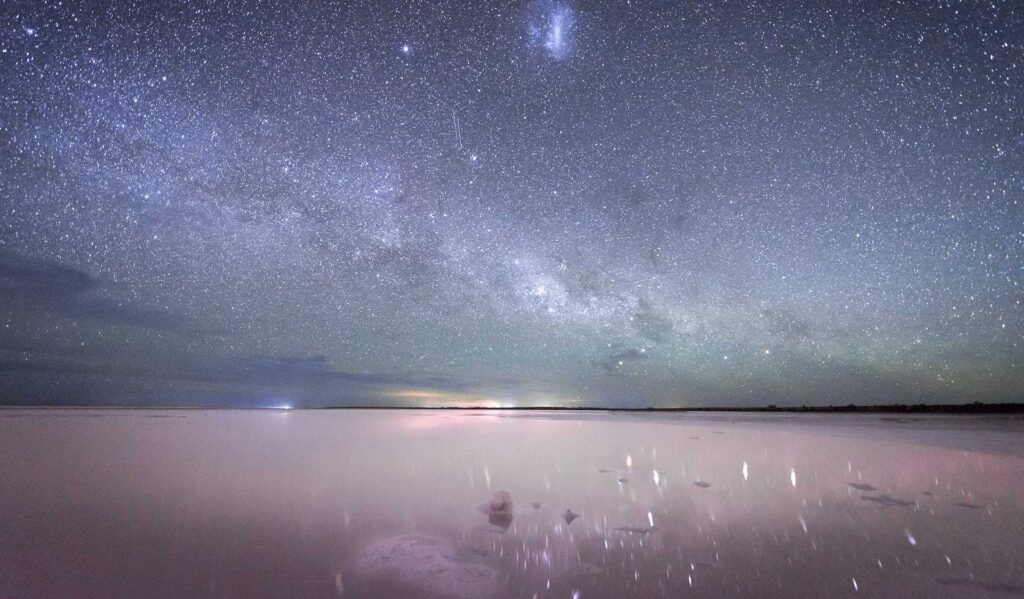
Murray Sunset National Park
For stargazers seeking skies as enchanting as the Milky Way itself, Murray-Sunset National Park is pure magic. Located in Victoria’s northwest, this remote sanctuary is home to the surreal Pink Lakes — like Lake Crosbie and Lake Hardy — which shimmer by day and mirror the stars by night. With zero light pollution and uninterrupted 360° views, it’s nature’s very own planetarium. Pack a blanket, bring your telescope (or simply your gaze), and prepare to lose yourself beneath one of Australia’s most underrated celestial shows.
Sleep Under the Stars in Style at Bubble Retreats
Perched high above the coast near Wilsons Prom, Bubble Retreats is a next-level stay made for hopeless romantics and stargazers alike. Winner of Airbnb’s Global ‘OMG!’ Category, this transparent bubble lets you fall asleep under a million stars in a luxe four-poster bed. It’s adults-only, pet-free, and seriously unforgettable. With ocean views, mountain air and celestial ceilings, this is glamping, reimagined. Bonus: pillow spray and Bluetooth speakers for max relaxation vibes.
Agnes, Victoria
Howqua Hill
An hour from Mansfield, Howqua Hill rewards the trip. Rich with history, the river here once teemed with gold miners during the gold rush days. While there’s no actual gold now, it’s a treasure trove for star lovers. We recommend camping at Sheepyard Flat, where plenty of clearings make gazing into the night sky effortless.
Grampians National Park
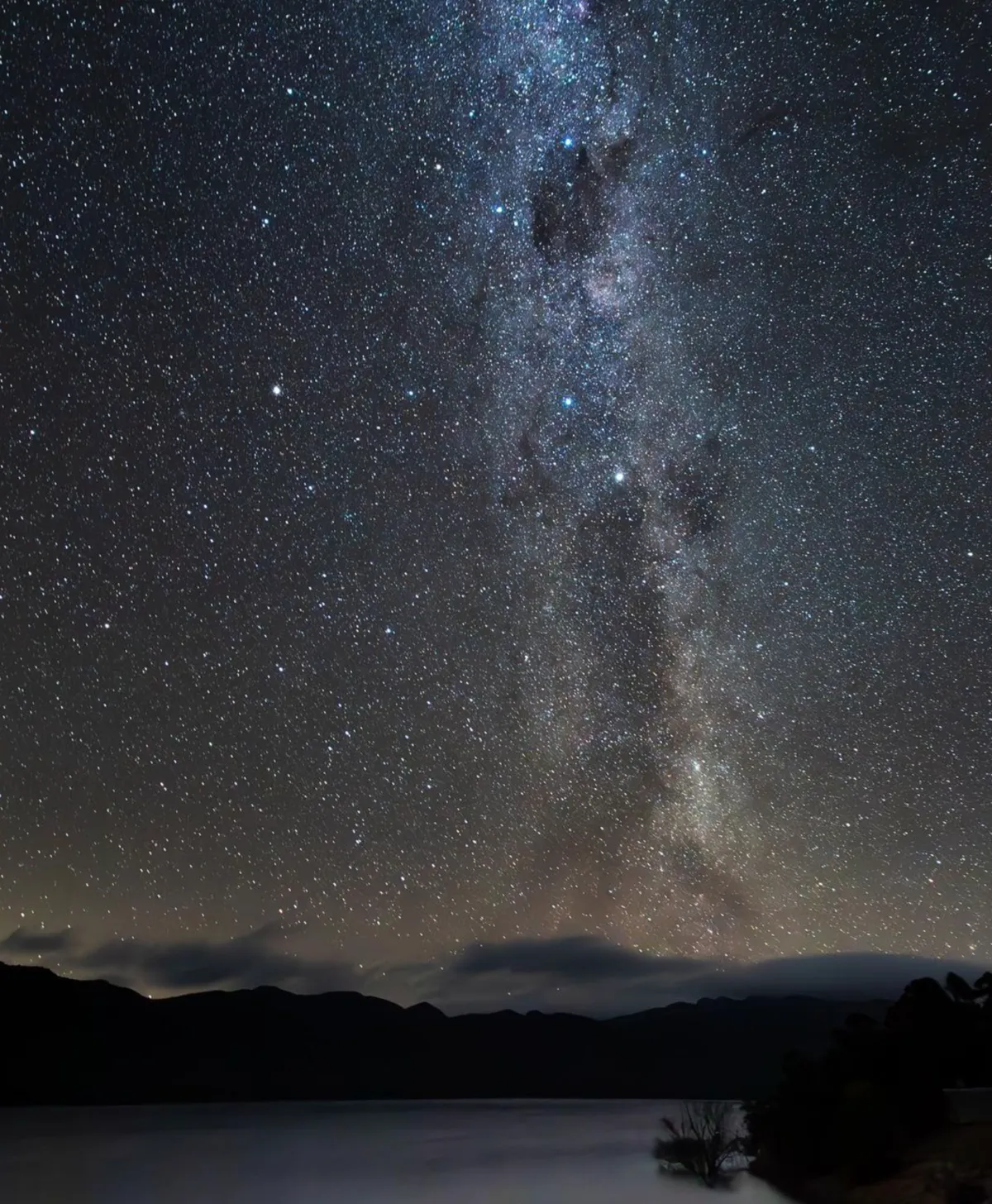
What better place to go stargazing than one of Victoria’s most popular — and expansive — national parks? Grampians National Park offers multiple prime spots for starry nights, including Cato Lake Park, Mount Arapiles, Reed Lookout, and Boroka Lookout. With minimal light pollution, your view of the stars remains uninterrupted. Just be sure to rug up — the temperature drops sharply as soon as the sun sets.

Phillip Island
Bundle up in layers before heading to Phillip Island’s beach with a hot chocolate in hand, ready to watch stars ignite the night sky. This quiet island town reveals its celestial side once you leave the streetlights behind and settle onto the sandy shores. Bring a towel to sit on and a blanket to wrap around you and your loved one, then prepare for deep, meaningful conversations beneath the vast, shimmering heavens.
Best Stargazing Spots in Australia: Queensland
Charleville Cosmos Centre
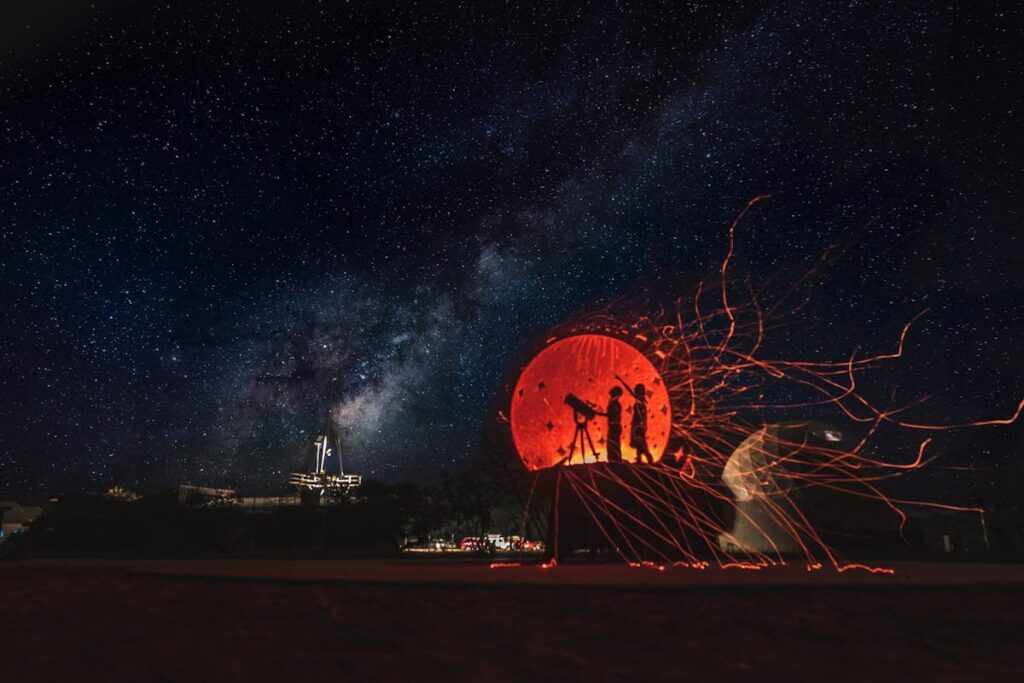
In Outback Queensland, the Charleville Cosmos Centre turns the night sky into theatre. Under some of Australia’s clearest skies, expert guides lead you through galaxies, nebulae and planets using high-powered telescopes that reveal the universe in exquisite detail. By day, the planetarium and solar viewing sessions add even more wonder. It’s an essential detour for travellers chasing big skies, deep quiet, and a rare, spellbinding encounter with the cosmos.
1 Milky Way, Charleville
Kingaroy Observatory
In Queensland’s South Burnett, Kingaroy Observatory turns stargazing into something delightfully irresistible. Under skies so clear they feel freshly polished, you’ll look through serious telescopes at nebulae, galaxies and stars that have been glowing since forever. James, the resident astronomy guru, keeps things fun and utterly unpretentious — part science class, part cosmic night out. By the end, the universe feels less distant and more like a surprisingly charming new acquaintance you want to spend more time with.
Geoff Raph Drive, Kingaroy
Winton Dark Sky Sanctuary
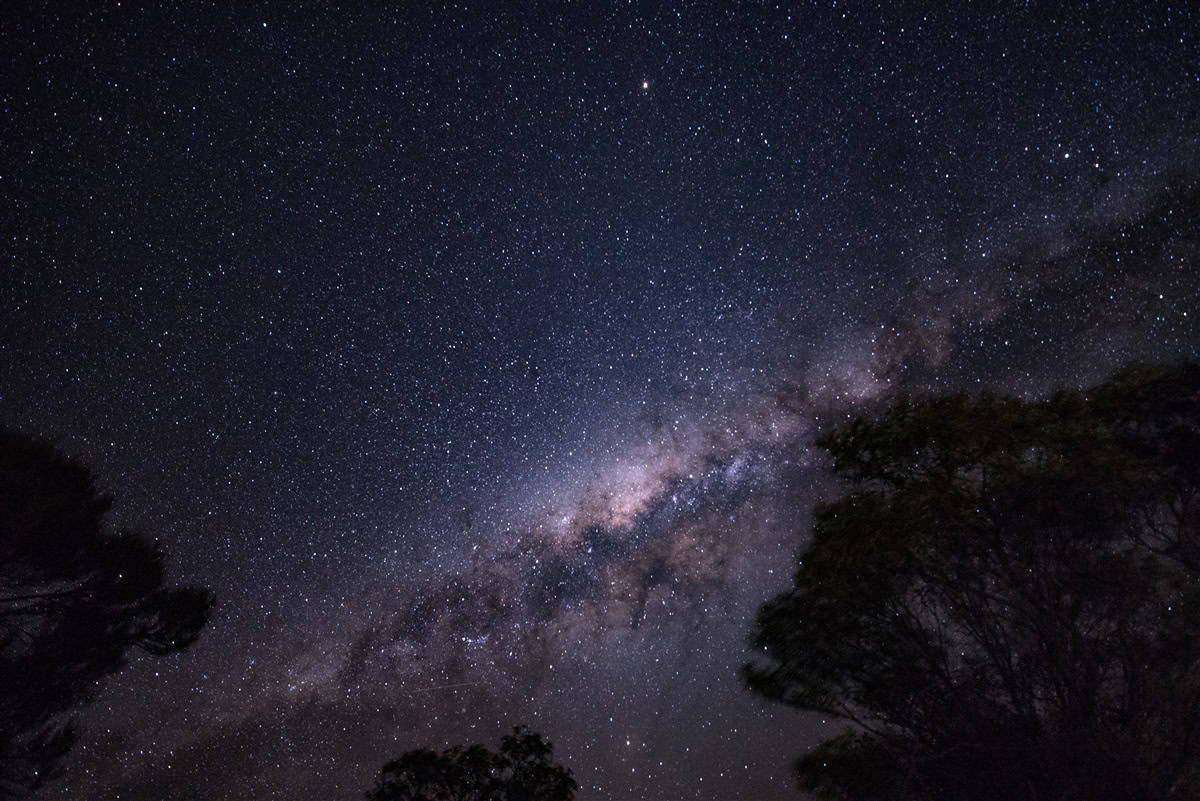
Winton’s Dark Sky Sanctuary is one of the world’s rarest celestial privileges — a stargazing mecca officially recognised for its pitch-black skies and uninterrupted views of the cosmos. A 15-hour drive from Brisbane, yes, but consider it a pilgrimage: by day, you’re in dinosaur country; by night, the Milky Way spills across the sky in spectacular fashion. With next-to-no light pollution, it’s a dream for astronomers and romantics alike — a true outback observatory, no telescope required.
The Granite Belt
The Granite Belt, located in the Great Dividing Range in the Darling Downs region of Queensland and the New England region of New South Wales, is a great spot for stargazing in Australia due to its high elevation, clear skies, and minimal light pollution. Unobstructed by urban lights, you have clear view of the celestial bodies above. Whether you have a telescope, binoculars or are just viewing it with the naked eye, the views from this spot are something to behold.
Best Stargazing Spots in Australia: South Australia

Lincoln National Park
Lincoln National Park may be a seven hour drive from Adelaide, but the trek is well worth the views you’ll witness come night time. On the southern tip of the Eyre Peninsula, this coastal haven offers pristine beaches, rugged cliffs, and expansive starry skies that make it a dream for campers and nature lovers.
River Murray Dark Sky Reserve
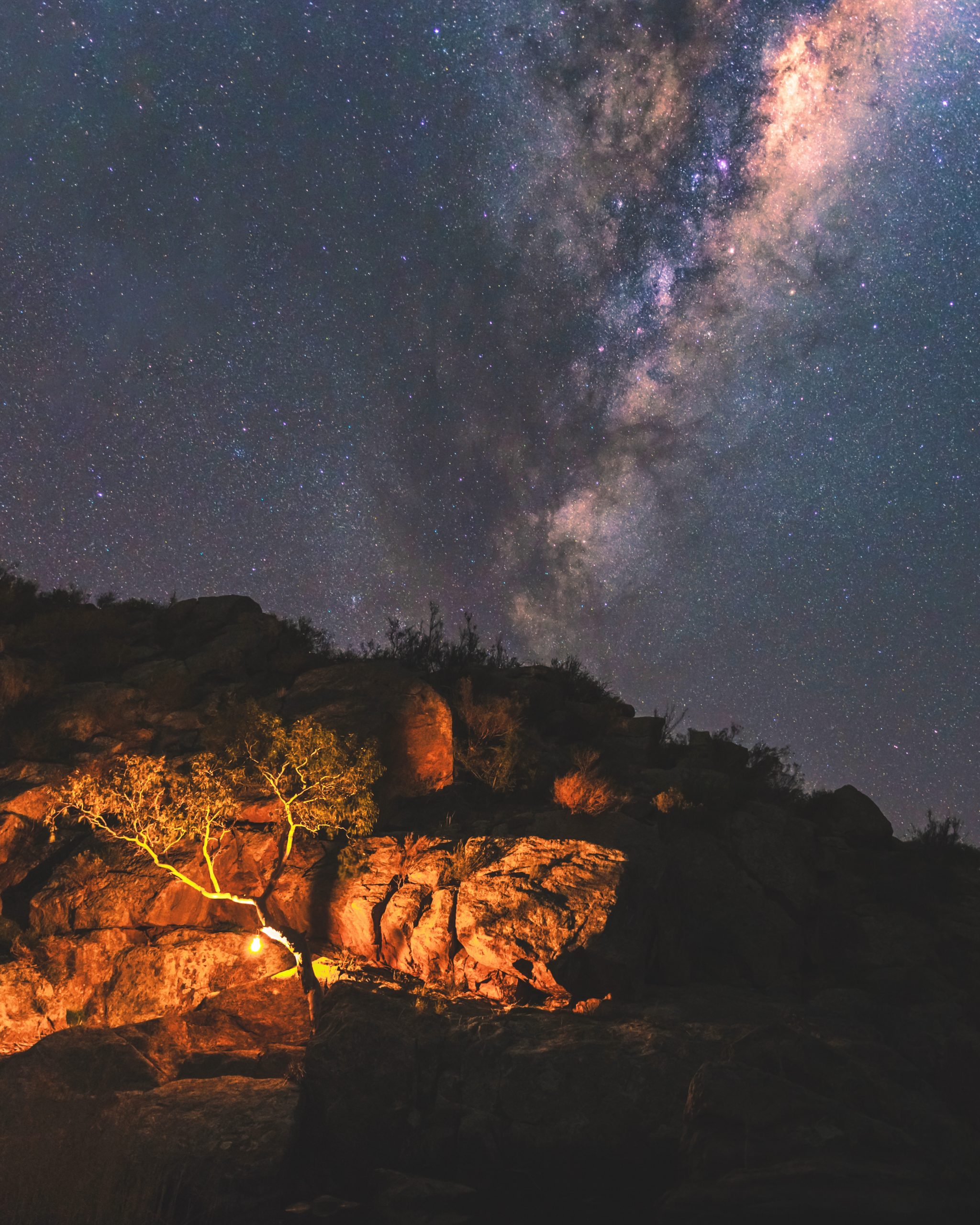
Dark Sky Reserves are the gold standard for stargazing — the clearest, darkest skies on offer, with nothing but the cosmos above. Australia’s first, the River Murray Dark Sky Reserve, is just 90 minutes from Adelaide, making it an easy evening escape with no need to camp (unless you want to). With barely a trace of light pollution, the stars blaze bright and bold — constellations, planets, even the Milky Way — all in dazzling, celestial clarity.
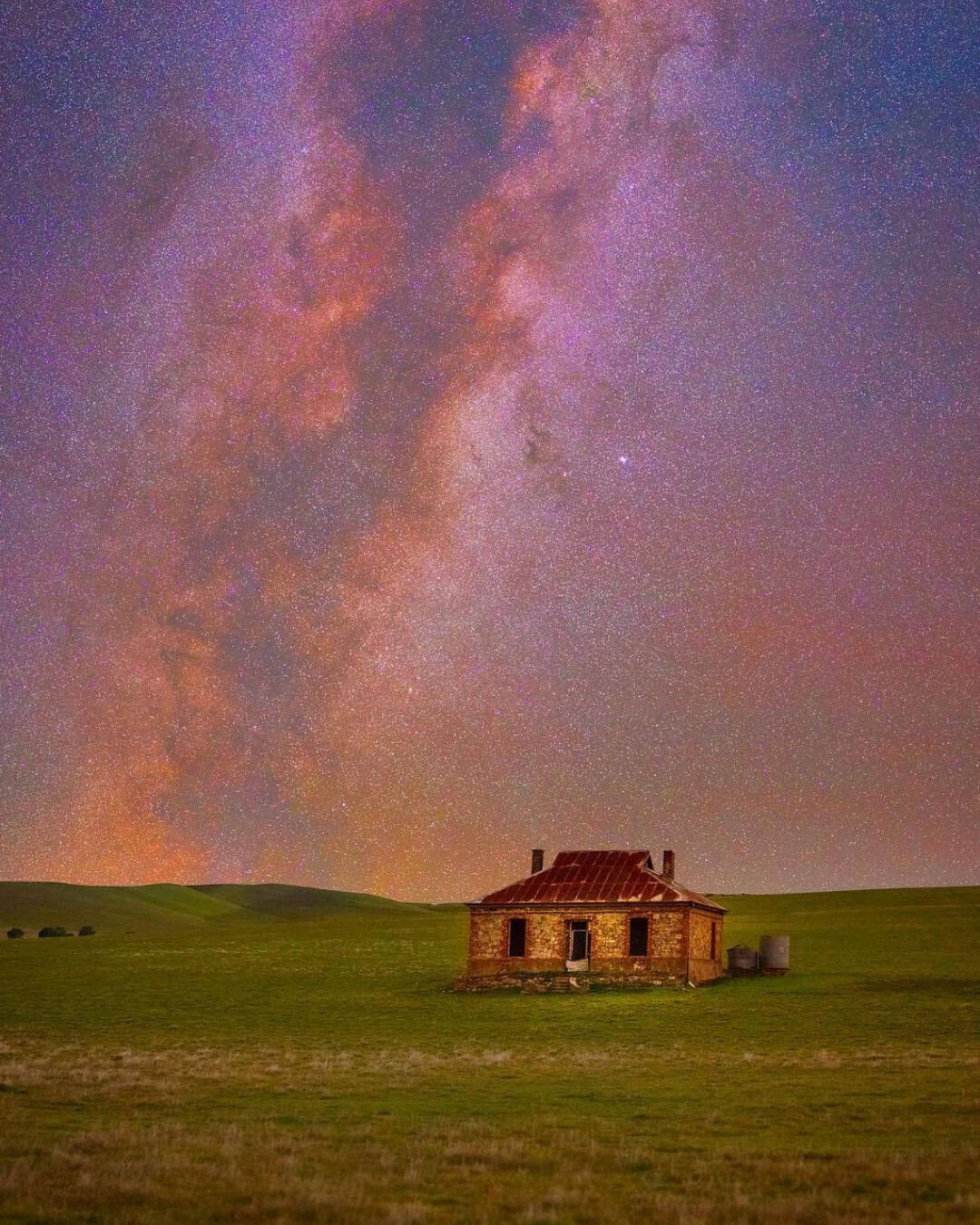
Burra
Framed by the vineyards of Clare Valley and the rust-toned sweep of the outback, Burra is a historic township with soul — all sandstone cottages, heritage trails, and wide skies. Just two hours from Adelaide, it’s an easy day trip that tempts you to linger longer. Book a charming Airbnb, pour a glass of something local, and settle in under a sky ablaze with stars — this is stargazing with a touch of old-world romance.
Best Stargazing Spots in Australia: Western Australia
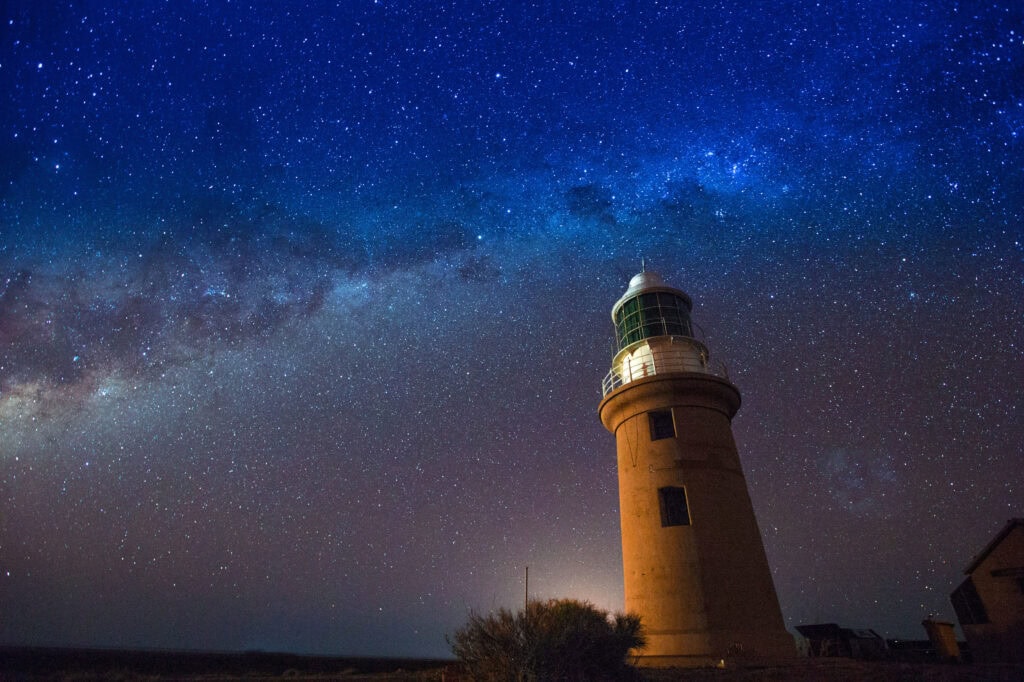
Exmouth
Discover the celestial magic of Exmouth with Ningaloo Stars — an astro-tourism experience set against the rugged beauty of Cape Range National Park and the World Heritage-listed Ningaloo region. As night falls, the Milky Way, Southern Cross, and distant planets blaze across Exmouth’s crystal-clear skies. Led by local Paul Woods and his expert team, these guided tours are inclusive, sustainable, and quietly spectacular. Seasoned stargazer or curious first-timer, this is WA’s cosmic soul — raw, humbling, and deeply connected to land and sky.
Pinnacles Dessert
Sprawling across 17,000 hectares in Nambung National Park, the Pinnacles Desert is a surreal maze of ancient limestone spires rising from gold-toned sand. A four-kilometre loop winds through this strange and spectacular landscape, where dawn and dusk create a hypnotic shift of colour and roaming wildlife makes the occasional cameo. Stay past sunset and the whole desert transforms — a star-bright sky stretching overhead with almost unbelievable clarity. Entry is $15 per car, with self-guided walk trails open year-round.
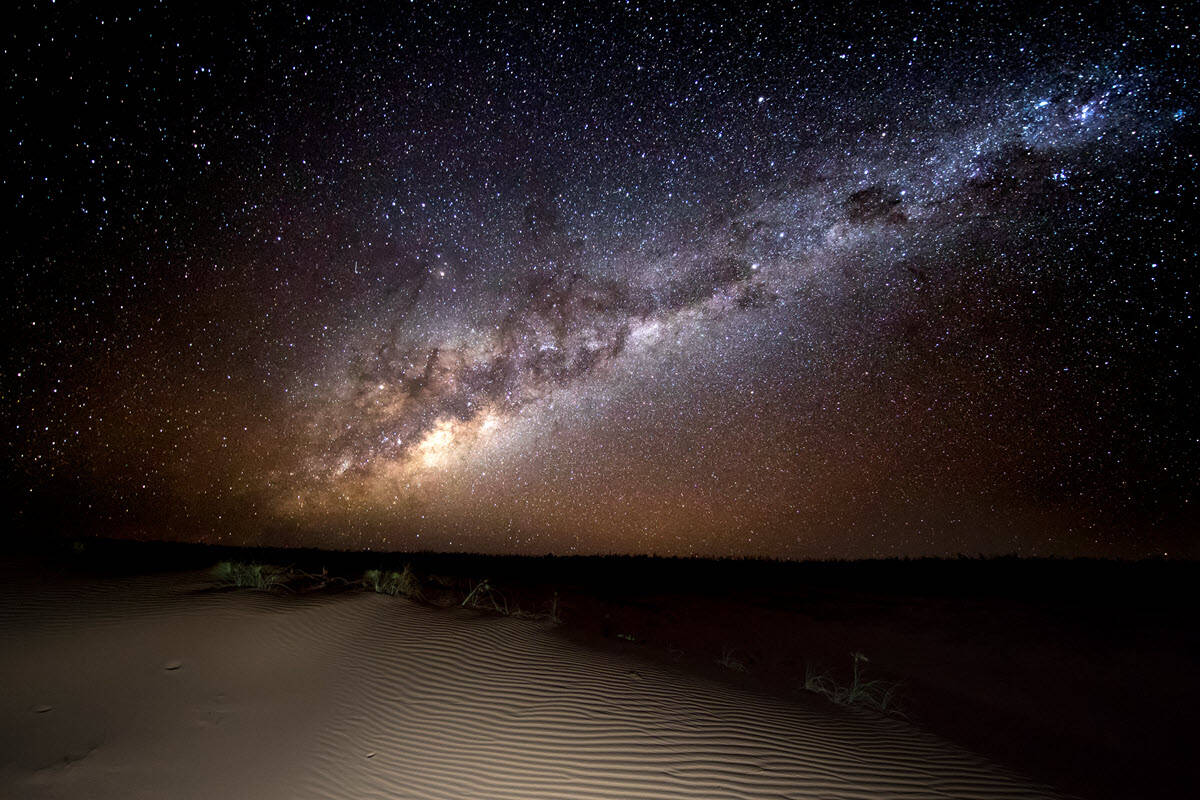
Eighty Mile Beach
It might be in the middle of nowhere — but that’s exactly what makes stargazing at Eighty Mile Beach so mesmerising. Set between Port Hedland and Broome, this remote stretch of WA coastline offers minimal light pollution and uninterrupted skies. It’s an ideal stop on a west coast road trip: just bring a blanket, sink into the sand, and let the stars above do the talking. Out here, the night sky feels infinite — and entirely your own.
Best Stargazing Spots in Australia: Tasmania
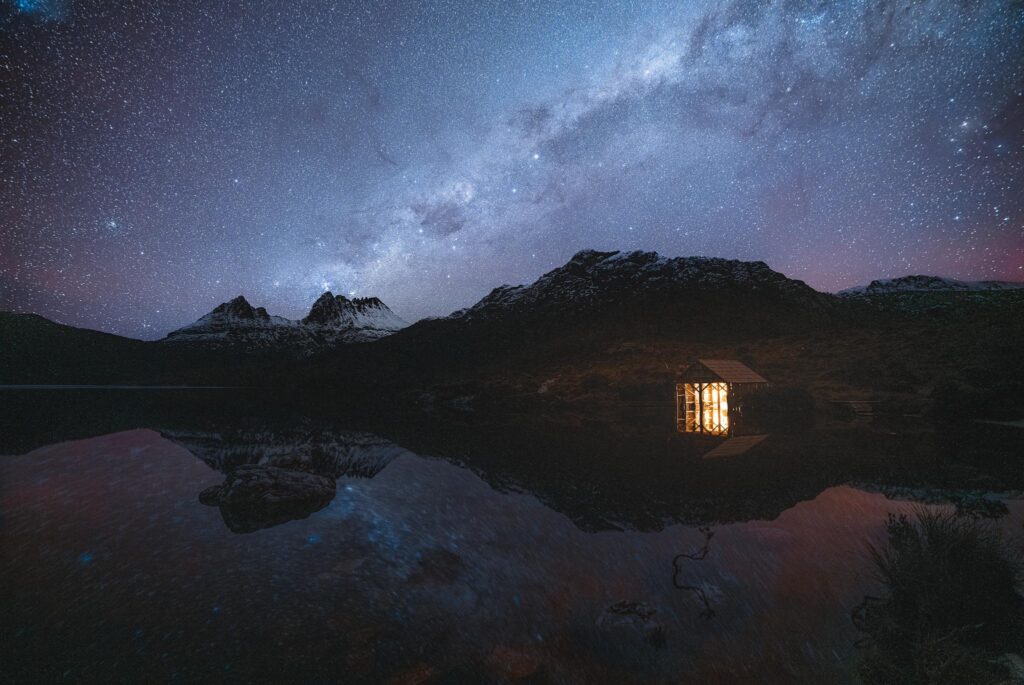
Cradle Mountain
Located within St Clair National Park, Cradle Mountain is an ideal destination for stargazing, offering some of the darkest skies in Tasmania. The area’s remote location, combined with its high altitude and clean, unpolluted air, creates ideal conditions for observing the night sky. Far from the light pollution of Launceston (just over a two-hour drive away), stargazers can enjoy breathtaking views of the Milky Way, constellations, and various celestial events.
Cradle Mountain Region, Tasmania
Bruny Island
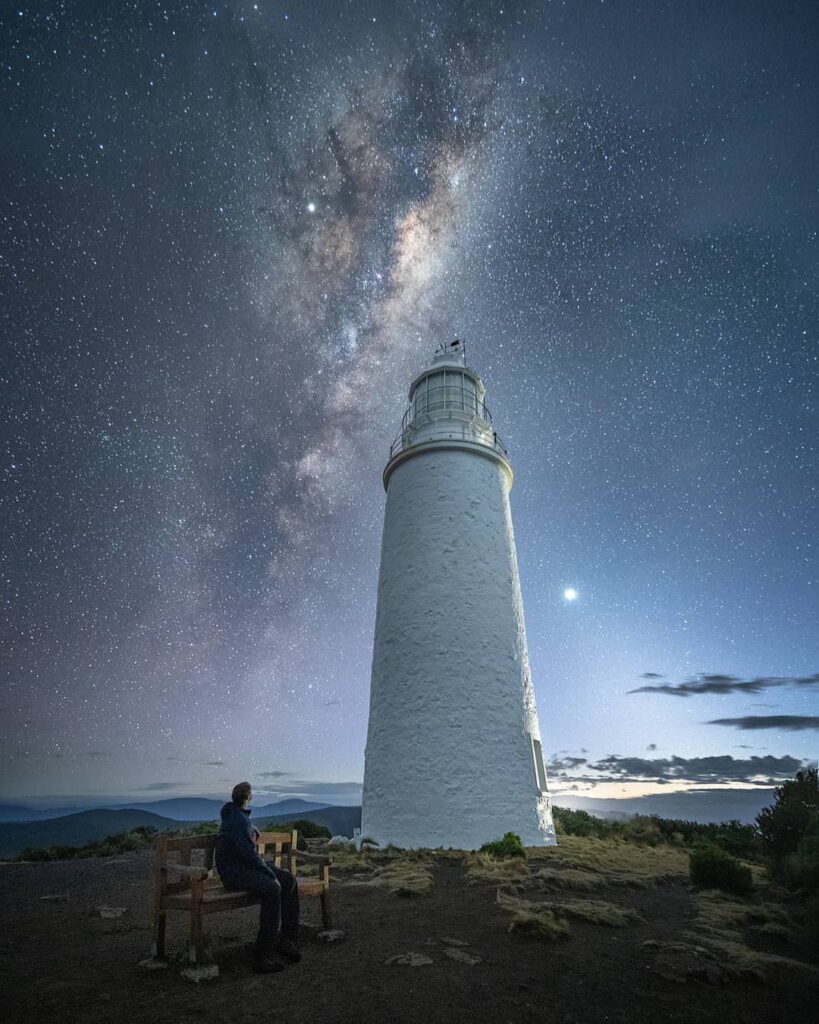
Bruny Island doesn’t just do stargazing — it shows off. The moment the sun dips, the sky switches to full-glam mode: Milky Way, constellations, possibly even the Aurora if she’s feeling flirty. Bring layers, snacks, and someone who won’t judge your excited squeaking when things get sparkly. Rugged beaches, cold air that wakes your whole soul, and a night sky so extra you’ll swear it has a publicist. Perfect.
Bruny Island, Tasmania
Cockle Creek
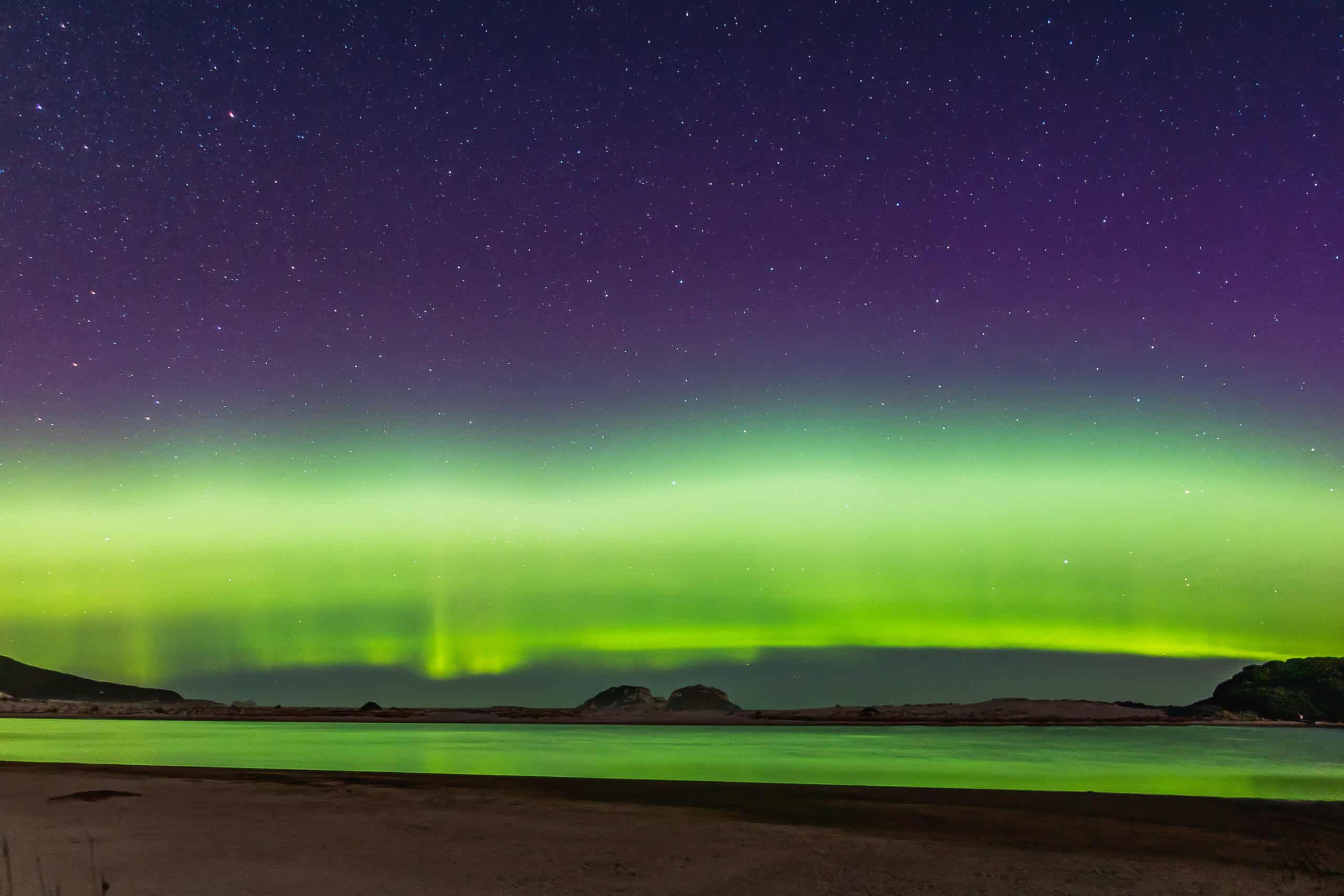
For a chance to witness the elusive Aurora Australis alongside a stunning starry sky, head as far south as you can to Cockle Creek in Tasmania. Just a two-hour drive from Hobart, this remote spot invites you to pitch your tent at the campground and wait for nightfall. As darkness falls, watch for shooting stars, familiar constellations, and the shimmering southern lights dancing across the crisp Tasmanian sky.
Cockle Creek, Tasmania
Best Stargazing Spots in Australia: Northern Territory

Uluru
Under the velvet hush of the Central Desert, Uluru becomes more than a sacred monolith: it’s a front-row seat to the cosmos. Here, where light pollution is a foreign concept, the Milky Way spills across the sky in crystalline splendour. Roaming star guides unravel ancient Indigenous astronomy beneath constellations that feel almost within reach.
It’s a celestial theatre unlike any other, where time slows, stories shimmer, and the night sky becomes an intimate, living canvas of wonder. Simply put, this might be the actual best stargazing spot in Australia.
Uluru, Northern Territory
FAQs

Australia’s best stargazing destinations include Warrumbungle National Park in New South Wales, the country’s first Dark Sky Park, and Lake Tyrrell and Murray Sunset National Park in Victoria, both known for uninterrupted 360 degree views. In the outback, Uluru in the Northern Territory and Winton’s Dark Sky Sanctuary in Queensland offer some of the darkest, most light pollution free skies in the country. For an easier escape from a capital city, the River Murray Dark Sky Reserve is just 90 minutes from Adelaide. The right spot depends on how far you’re willing to travel and whether you want a guided experience or a self-directed one.
Winter months, generally June to August, tend to offer the clearest skies for stargazing across most of Australia, thanks to longer nights and lower humidity. A moonless or new moon night will always give you the darkest conditions and the best view of the Milky Way. If you’re chasing a specific event, such as a full moon or meteor shower, check the date in advance, as a bright moon can wash out fainter stars regardless of how dark the location is.
No, a telescope is not essential for a great stargazing experience. Many of Australia’s best spots, including Eighty Mile Beach in Western Australia and Phillip Island in Victoria, can be enjoyed with the naked eye alone, particularly for viewing the Milky Way and major constellations. For a more detailed view of planets, nebulae and star clusters, visiting a dedicated observatory such as Mudgee Observatory in New South Wales or the Charleville Cosmos Centre in Queensland gives you access to professional grade telescopes and expert guidance.
A Dark Sky Park or Dark Sky Reserve is a location that has been officially recognised for having exceptionally low light pollution and protected night skies. Warrumbungle National Park was Australia’s first Dark Sky Park, while the River Murray Dark Sky Reserve near Adelaide was the country’s first reserve of its kind. These accreditations mean the surrounding areas actively manage artificial light to preserve visibility of the night sky, making them some of the most reliable destinations in Australia for genuinely dark, uninterrupted stargazing conditions.
Yes, though sightings are rare and largely confined to the southernmost parts of the country. Tasmania offers the best chances on the Australian mainland and island territories, with spots like Cockle Creek, a remote southern location near Hobart, giving stargazers a genuine shot at catching the southern lights alongside the regular night sky. Aurora visibility depends heavily on solar activity, so checking an aurora forecast before you travel will give you a far better idea of your chances on any given night.
Got your explorer hat on and want to discover more scenic and fun things to do around Australia? Check out the best travel sales & deals happening right now, or take a look at the best outdoor bath accommodation in Australia.